With months of my life spent in Asia across six countries since my youthful 1998 days, South Korea called to me like a beacon. Even as I had the opportunity to visit some Asian countries more than once and spend three months in Southeast Asia, I’ve dreamed of visiting Korea over 15 years.
Growing up in suburbs of NYC and LA, I was blessed to feast on the endless wealth of Korean eateries and restaurants from the U.S. densest, historic communities of Queens and Los Angeles. In fact, my 1990s home-cooked meals with lifelong Korean friends in Queens was when I first fell for Korean food as a teen, starting with seafood pajeon, then dolsot bibimbop, japchae and so on.
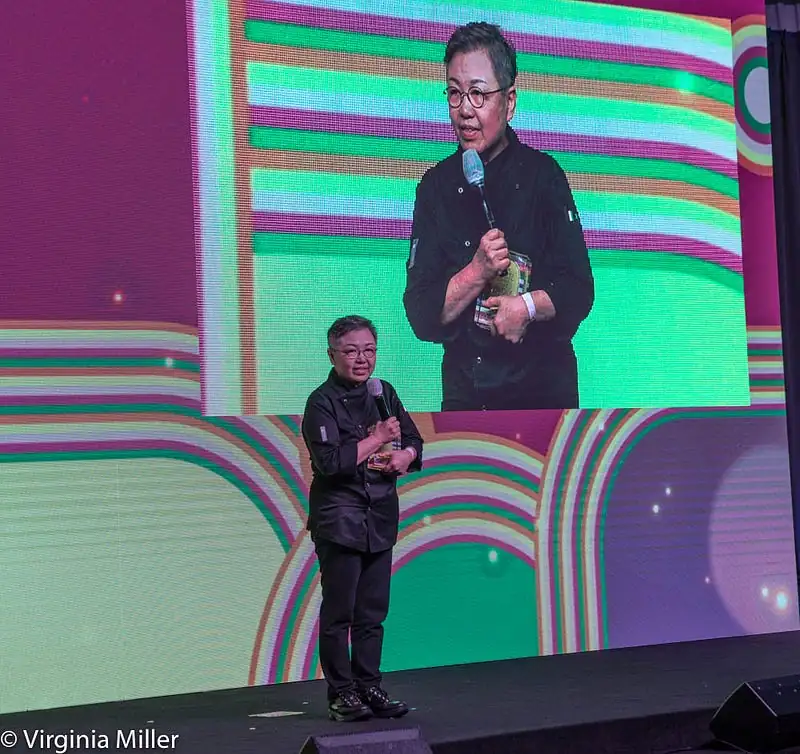
Ever since, I hoped to visit the home source and missed one press trip opportunity having already committed to another trip. Finally in October 2022, I visited S. Korea, my 7th Asian country. The impetus for the trip was food and drink festival, Taste of Seoul, on its third year but first in-person awards ceremony at the Sebitseom Floating Island Convention Hall. The prestigious event (via the Seoul Metropolitan Government and Bar & Dining Magazine) awards top 100 restaurants, bars and bakeries in Seoul. It was the first citywide in-person gastronomy event since pandemic began. What a privilege to be there with just a few international press from Japan, China, Paris, Singapore and England, as it was to see (and meet) local chef legends and greats across food and drink.
The week was packed with events from Michelin-star restaurants (some partnering with bars, like chef Kang Min-goo and Asia’s 50 Best Mingles’ special collaboration dinner with the bartenders of Asia’s 50 Best Bars’ Le Chamber), Seoul Marché local farmers market in Oil Tank Culture Park, plus classes and tastings, like making gojuchang and tasting through traditional Korean spirit and liquors.
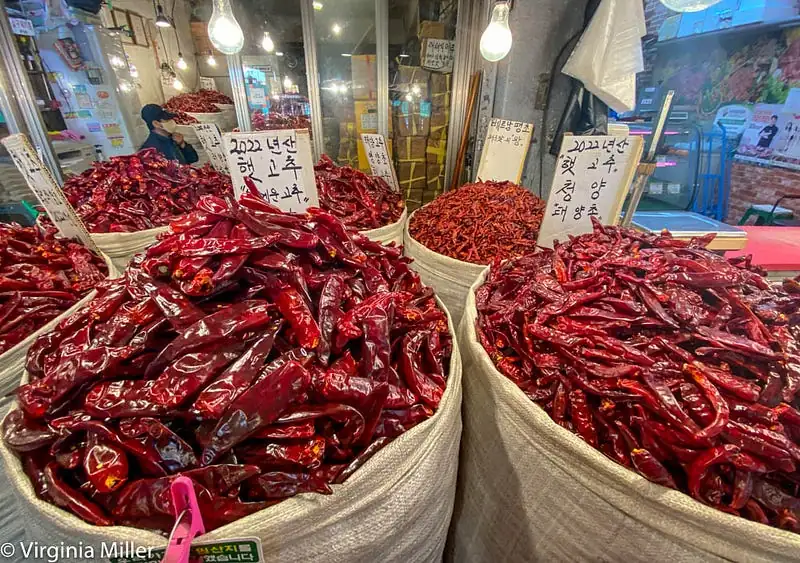
In addition to all this goodness, with the help of a dear colleague and Seoul native, Choi Jung-yoon (head chef at Sempio Korean Fermentation Culinary Research Centre; founder of JY Tour), my hosts and new friends I made on in Seoul that week, I did my usual: packed in restaurants and bars, visiting over 10 Michelin-starred or highly lauded restaurants, a few casual eateries and bakeries, over 10 cocktail bars and three major, epic markets: Noryangjin Fish Market (Seoul’s answer to Tokyo’s famed Toyosu Market), Gyeongdong Market for produce and Majang Meat Market (over 100 years old with 3000+ stalls; Korea’s largest meat market and supplier). I was honored to visit the first two markets with chef Park Sung-bae of Michelin-starred Onjium (more below) and chef Sung Anh of now three Michelin-starred Mosu, which started in San Francisco, while I hit up the meat market with father-son owners of upscale Korean beef Born & Bred (more in my upcoming Korean barbecue article).
In addition to the great Born & Bred and Byeokje Galbi, which I write about in my upcoming article on the not-widely-understood world of Korean barbecue, here are eight standout Seoul restaurants, fine dining to casual (stay tuned for my Seoul cocktail bar guide in 2023), and my hotel recommends:
WHERE TO STAY
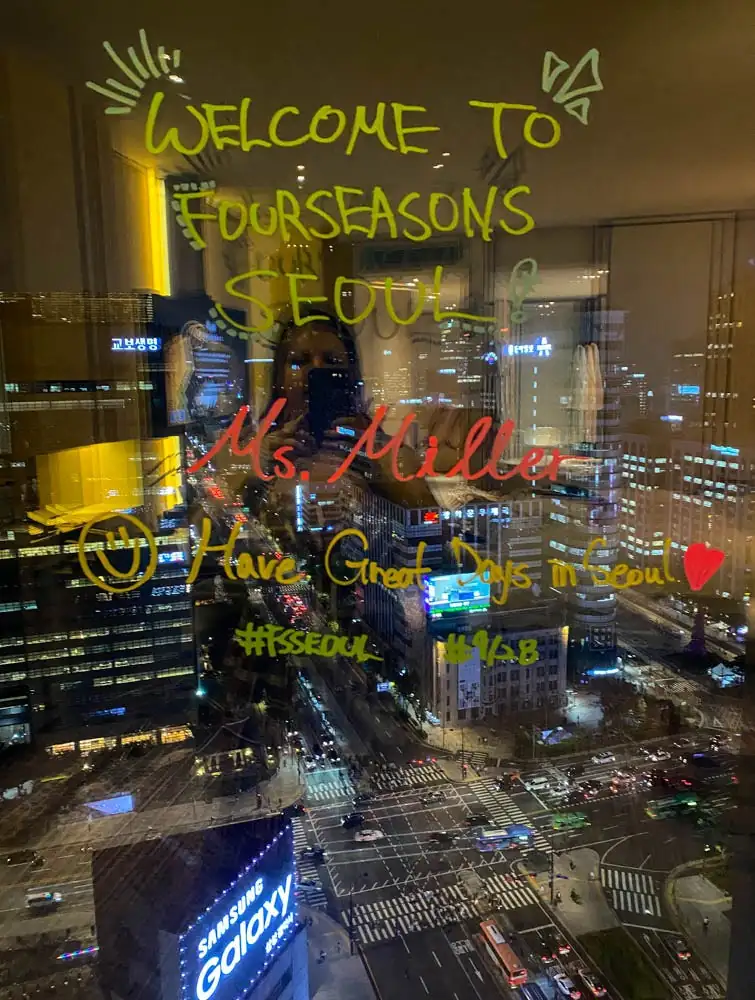
Four Seasons Seoul
It certainly helps that Four Seasons Seoul houses two great bars (the acclaimed Charles H. and new, all Korean spirits bar Oul — more on these in my Seoul bar guide in 2023), though I didn’t get to try their restaurants. But it’s luxe, beautiful outfitted, soothing rooms — mine on the 25th floor with city views — and impeccable service that make this one of the best Four Seasons I’ve stayed at anywhere in the world.
// www.fourseasons.com/seoul
Andaz Seoul Gagnam
Let’s be honest: Andaz Seoul Gagnam was much noisier, less soothing and not at the service and exquisite decor level of Four Seasons Seoul. But it was more ideally located nearer to numerous bars and restaurants on my hit list, a couple even within (longer) walking distance, which was crucial given Seoul’s abysmal cab situation (there were times it was impossible to call a car at all, especially in the rain, brutal for a woman alone late at night. The country has notoriously fought off Uber — the Uber app calls cabs, while local Kakao T app is awful, not allowing anyone who doesn’t live in S. Korea to add a credit card, thus eliminating “guaranteed” cab options).
All that to say, Andaz’ more central location for some dining and drink plus slightly lower prices make it a viable stay, even if I missed the respite of Four Seasons. But Andaz’ hip design in cozy rooms with cheery splashes of yellow allow quiet from the bustling lobby and noisy streets outside, while their spa and huge swimming pool is a great asset.
// www.hyatt.com/en-US/hotel/south-korea/andaz-seoul-gangnam/selaz
MODERN KOREAN FINE DINING
7th Door
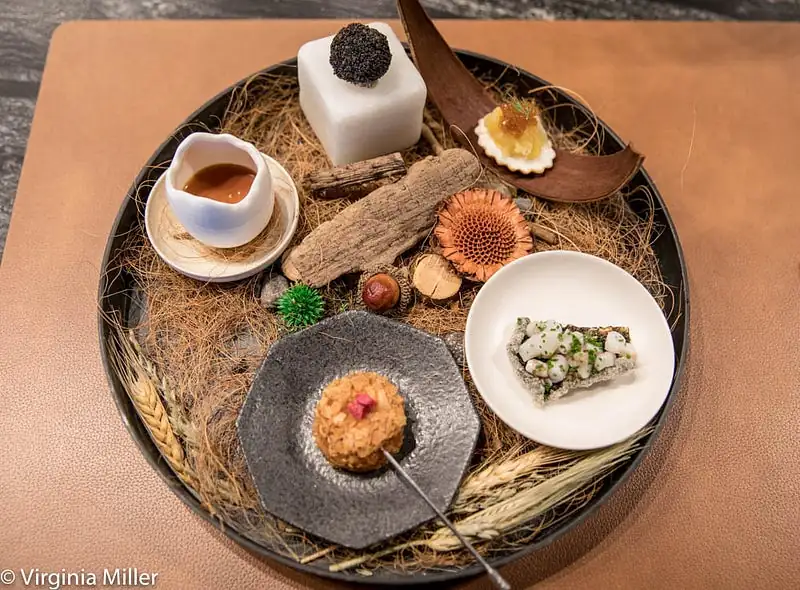
Don’t make me choose favorites, but if I had to, 7th Door from chef Kim Dae-chun might be it (also of restaurant Toc Toc, which opened 2020; wish I had time to visit). His mastery of Korean aging and fermentation certainly impresses, but the refined yet playful spirit with which he does it at 7th Door makes this Michelin-starred, Top 100 Taste of Seoul restaurant a refreshing, forward taste of modern Korean cuisine.
The intimate chef’s counter restaurant allows a front row view of chef Kim and team’s preparations, including beautiful equipment and plateware. 7th Door represents “the seven tastes of food,” moving from the five flavor profiles to the sixth (fermentation and aging), all steered by the seventh: chef’s culinary viewpoint.
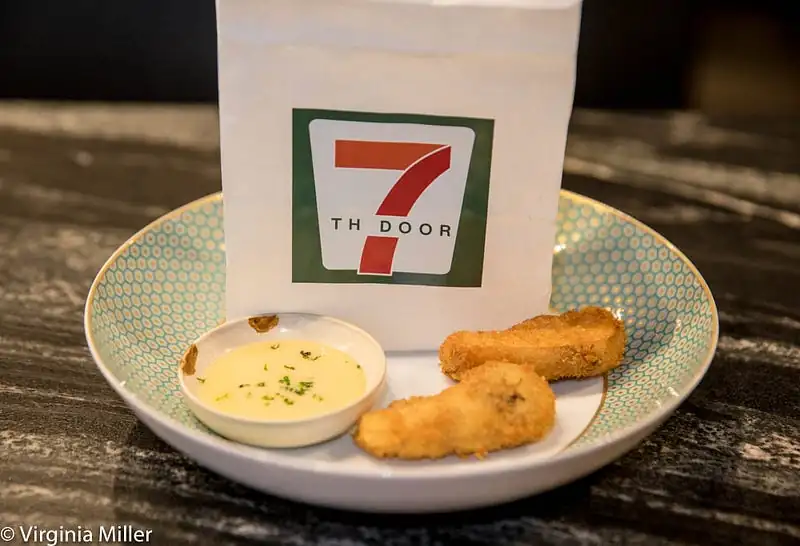
Small bites thrill, like dried persimmon and soybean with fermented cheese on a stick, while raw rudder fish in aged soybean and chili paste, minari (Korean herb) and plum, is silky, bright and sashimi/crudo-esque. Fried pine mushroom “sticks” arrive in a little bag with a 7-Eleven logo labeled “7th Door.” Served with a bowl of yuzu soybean paste sauce to dip, evoking honey mustard and chicken tenders, this delicious whimsy transports to childhood, Korea-style — and recalling Japan’s higher-quality food to-go than other global 7-Elevens (as the company became mostly Japanese-owned in 1991).
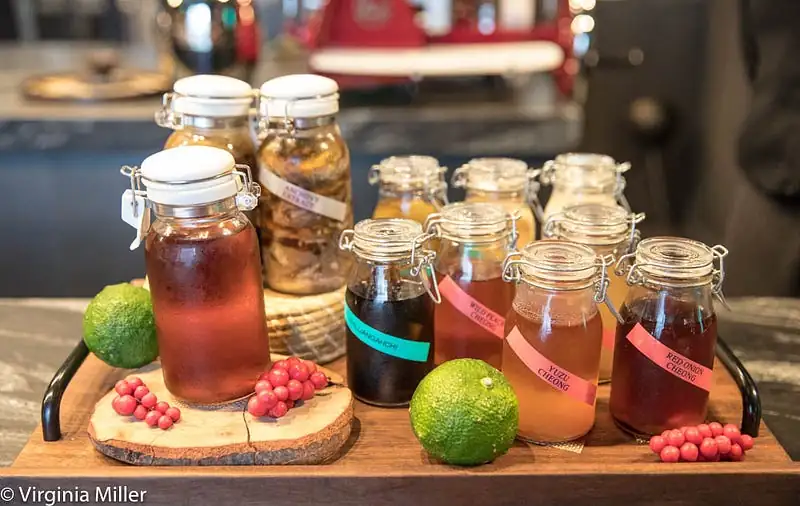
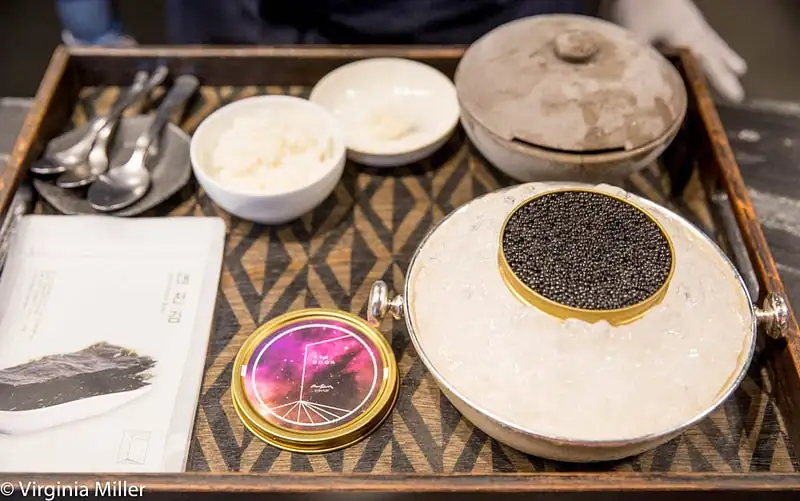
From tofu to lobster, superb Korean hanwoo beef to perilla seed noodle courses, each is a pleasure, layered with fermented and aged ingredients and sauces shown to me in jars at the beginning of the meal. But when a whole local crab arrives, its organs and innards scraped out and mixed with rice, served alongside local caviar, I am especially intrigued. Chef Dae-chun takes little nori/seaweed sheets and makes his version of sushi handrolls, the unctuous crab rice topped with caviar. Wow. And wow.
Wine pairings were heavy on Europe, like white Burgundy (2020 Domaine Collotte Marsannay Blanc) or 1997 Justino’s Colheita Madeira with dessert. On the Korean side, floral, delicate Khee 22 Soju happily companioned the fried pine mushroom course, while ELLYEOP PYUNJOO Takju is milky, fermented, funky and elegant, with the raw fish course.
It was a real honor to spend a day with chef Kim at Jingwansa Temple in Bukhansan National Park (established in 1010 BC, but burned down in the Korean War, restored in 1963). We spent the day with gracious, glowing Buddhist nuns eating their lovingly prepared, traditional Korean temple food. Chef Kim has been studying this historic vegan cuisine], with plans to open a fine dining vegan temple food restaurant in 2025. It will be the first of its kind, focused on inner healing and the nurturance of food made with spiritual heart as much as technique.
One thing’s for sure: I’d go wherever chef Kim is cooking.
// Gangnam-gu, Hakdong-ro 97-gil, 41 4층; www.7thdoor.kr
Restaurant Allen
Just receiving its first Michelin star months after opening (and right after my visit), Top 100 Taste of Seoul’s Restaurant Allen is tricky to find inside the huge Center field East mall, but once you do, you’re rewarded with chef Suh Hyun-min’s creative modern Korean fare (Allen is his English name). Korean fermentation and aging play with modern technique gained on his impressive resume at the likes of Eleven Madison Park in 2013, where he eventually was promoted to sous chef under Daniel Humm in a heyday era of EMP. Cooking in San Francisco, Las Vegas and NYC over 17 years, Allen returned home to Seoul as opening chef of L’Impression, which garnered two Michelin stars that first year under Allen. In 2021, he opened Restaurant Allen, also running an organic farm in Pyeongchang to source their own seasonal ingredients.
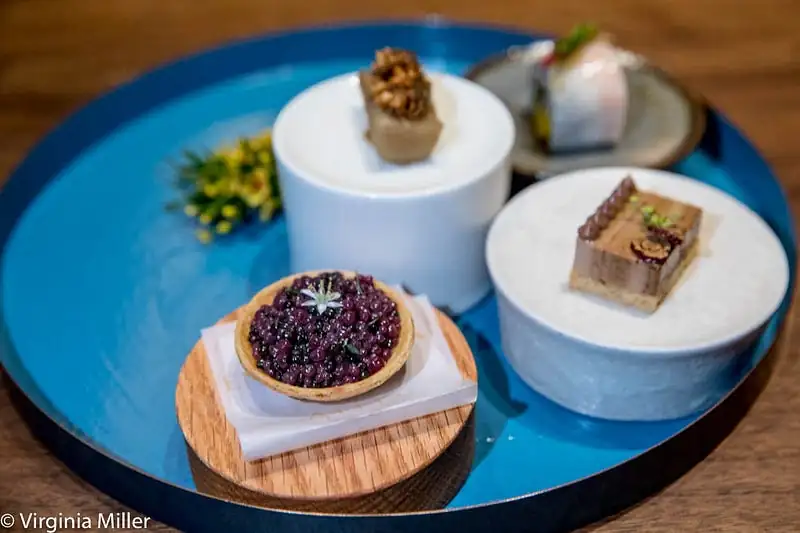
The restaurant’s menu is centered by the four seasons and striking tableware. Varied amuse-bouches served on artisanal wood were a highlight both times I dined at Allen, first on a regular night, then again for a special collaboration dinner with chef Lee Chung-hu of Michelin-starred Zero Complex. Head sommelier Joonho Baak worked at 2 and 3 Michelin-starred restaurants in my hometown of San Francisco (Benu, Californios, The French Laundry), smartly pairing each course with international wines and Korean spirits, centered by his impeccable service.
An amuse of a smoked sturgeon creme fraiche tart topped with pomegranate and local caviar starts things off with light-hearted elegance, while a standout course is mushroom four-ways, including lions mane braised in silk kelp or hen of the woods and button mushrooms pan-roasted in butter with horseradish.
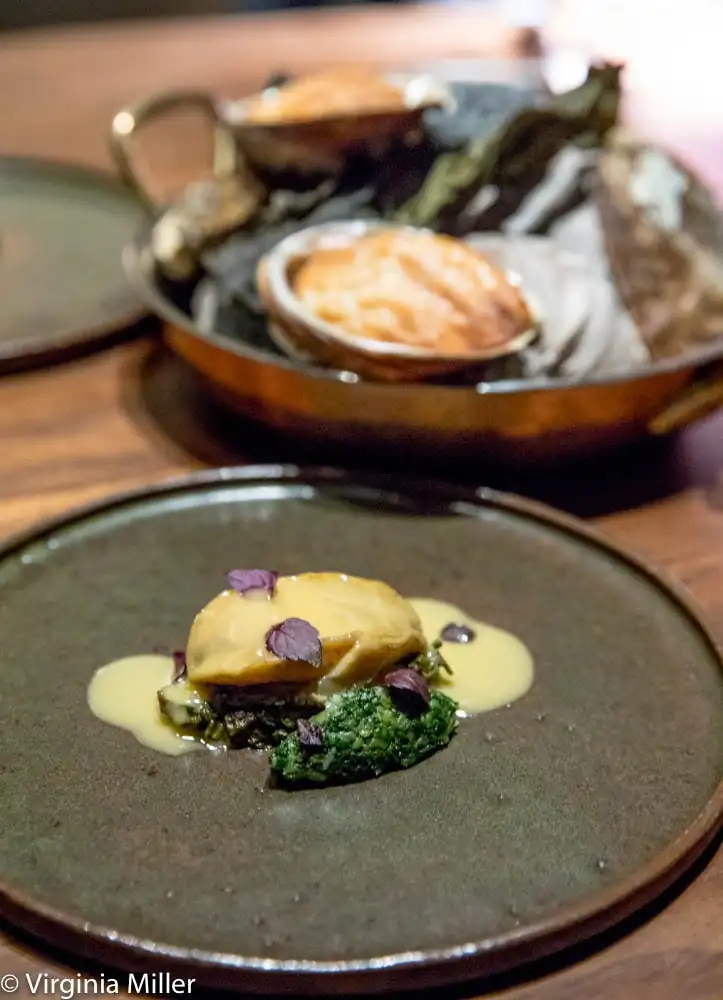
Butterfish is marinated in Korean white miso, partnered with taro braised in Jamon Iberico in a smoked tea broth. Abalone, acorn and Korean mustard leaf in a yuja citrus beurre blanc under an artful abalone-shaped puff-pastry is a visually impressive en croute riff.
Blessedly savory-sweet desserts please, like caraway seed sorbet with apricot and Branford cherries and savory wedges of smoked triple cream cheese. Chef Allen’s courses surprise, rethinking modern Korean food with a global perspective, while gracious service also has an international vibe.
// 2F Center field EAST E205, 231 Teheran-ro, Gangnam-gu, Seoul; https://restaurantallen.com
Joo Ok
Top 100 Taste of Seoul restaurant Joo Ok is also #17 on Asia’s 50 Best Restaurants and a two Michelin restaurant. It’s easy to see why. Gracious chef Shin Chang-ho showcases his pristine aesthetic on the third floor of The Plaza Hotel Seoul where intimate rooms gaze over Seoul Plaza below and mountain ranges in the distance, a dramatic view from a peaceful table. Seasonal ingredients and fermented sauces dominate, as a meal here begins with vinegar drinks prepared tableside (think pine leaf vinegar or red grape juice with soda water), recalling vibrant shrub drinks.
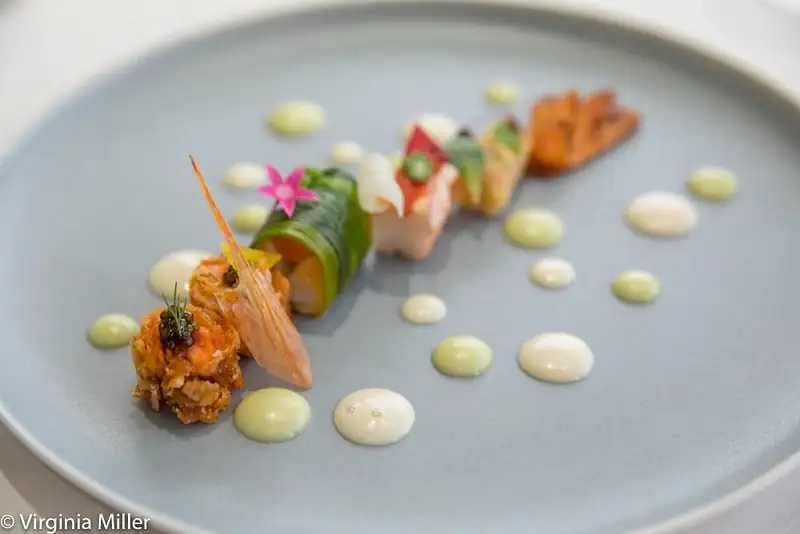
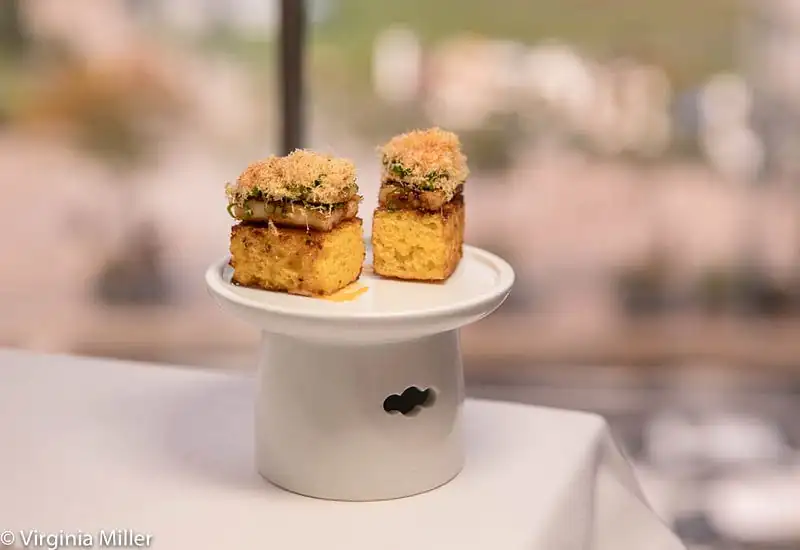
Amuse bouche bites hold “wow” moments, like Korean beef tartare topped with an egg yolk jelly disc on an almond crisp or a juicy, breaded braised chicken cromesqui crowned with a perilla leaf. Korean wild prawns arrive in four forms, while sea eel on makgeolli bread under shaved deoduck root and dried pollack is playful as it is utterly delicious. Warm service and elegant wine and champagne (Krug dominates the best restaurants in this city) seal the deal, making it one of the best meals of my research.
// 3F The Plaza Hotel, 119 Sogong-ro, Jung-gu, Seoul; www.hoteltheplaza.com/en/dining/joook.jsp
Jueun
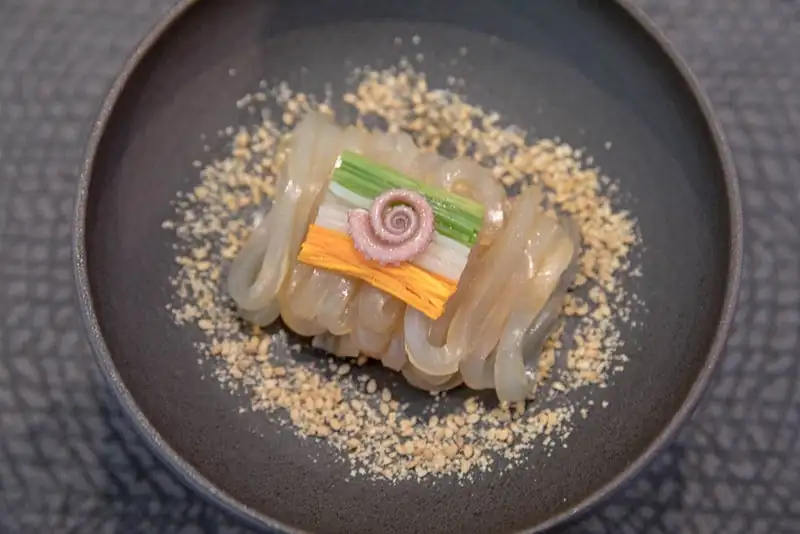
Hidden upstairs on the 8th floor of an office building behind Gyeonghuigung Palace is soothing, white Jueun from chef Park Ju-eun, former head chef at Hansikgonggan. This top 100 Taste of Seoul restaurant offers traditional Korean dishes in clean, modern form, served in traditional tableware — from Haeinyo porcelain to stoneware — and a pairing of wines and Korean spirits (like the revelatory Moon 320 Pine Nut Makgeolli).
Dishes artfully exemplify Korean purity of ingredients: case in point? Tangpyungchae, a mung bean jelly salad that was part of the royal court cuisine in Korea’s Joeson Dynasty, but chef Ju-eun serves it as nokdumuk (mung bean jelly in noodle-like form) surrounded by toasted sesame seeds, julienned vegetables and mushrooms centered by an octopus tentacle to look like the historic Korean flag. Visual and edible art.
Geumtae jorim, a braised potato dish, is topped with flaky sea perch mullet fish and seaweed in a rich, orange vichyssoise of chili powder and soy. We began the meal refreshed with a pour of celery green juice. I departed Jueun deliciously and healthfully nurtured.
// 8F, 36 Gyeonghuigung-gil, Jongno-gu, Seoul; www.restaurantjueun.com
Onjium
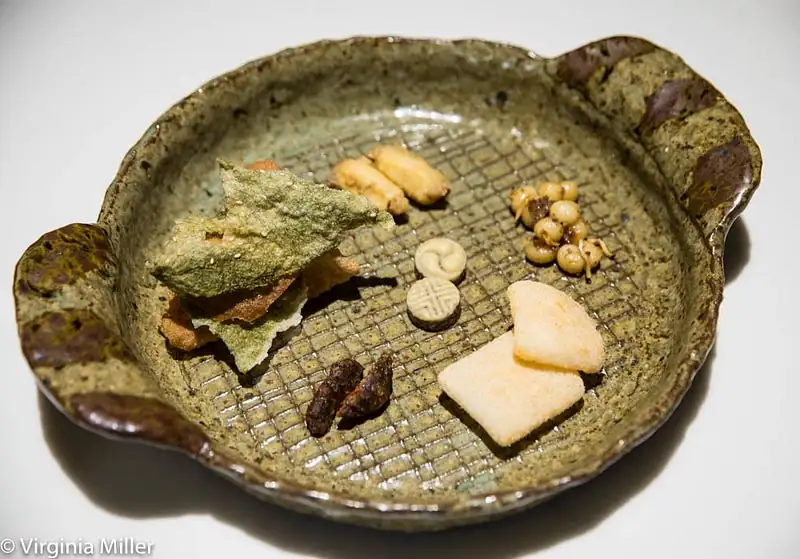
Michelin-starred Onjium is #30 on Asia’s 50 Best and I watched lovely chefs Cho Eun-hui and Park Sung-bae win Best Korean Restaurant among incredible restaurants in their category at the Taste of Seoul awards on September 30, 2022. Onjium (meaning “creating in the right way”) is an impressive institute dedicated to Korean heritage and culture since 2013, housed in a modern, glass walled, multi-floor building (formerly home to UNICEF). The space holds clothing and design studios, including striking modern renditions of traditional Korean dress and plateware, and miniatures of Korean architecture. The restaurant — with views across trees and city skyline — likewise reaches deep into Korean food history, as the team researches recipes in books hundreds of years old.
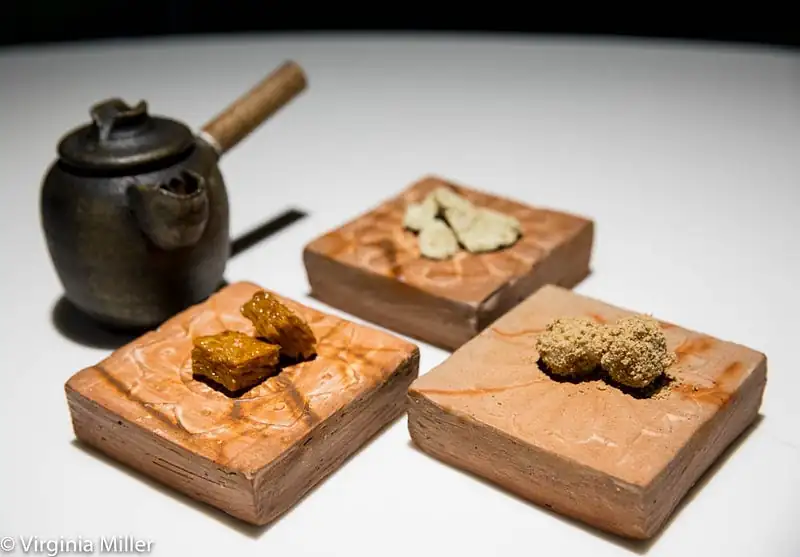
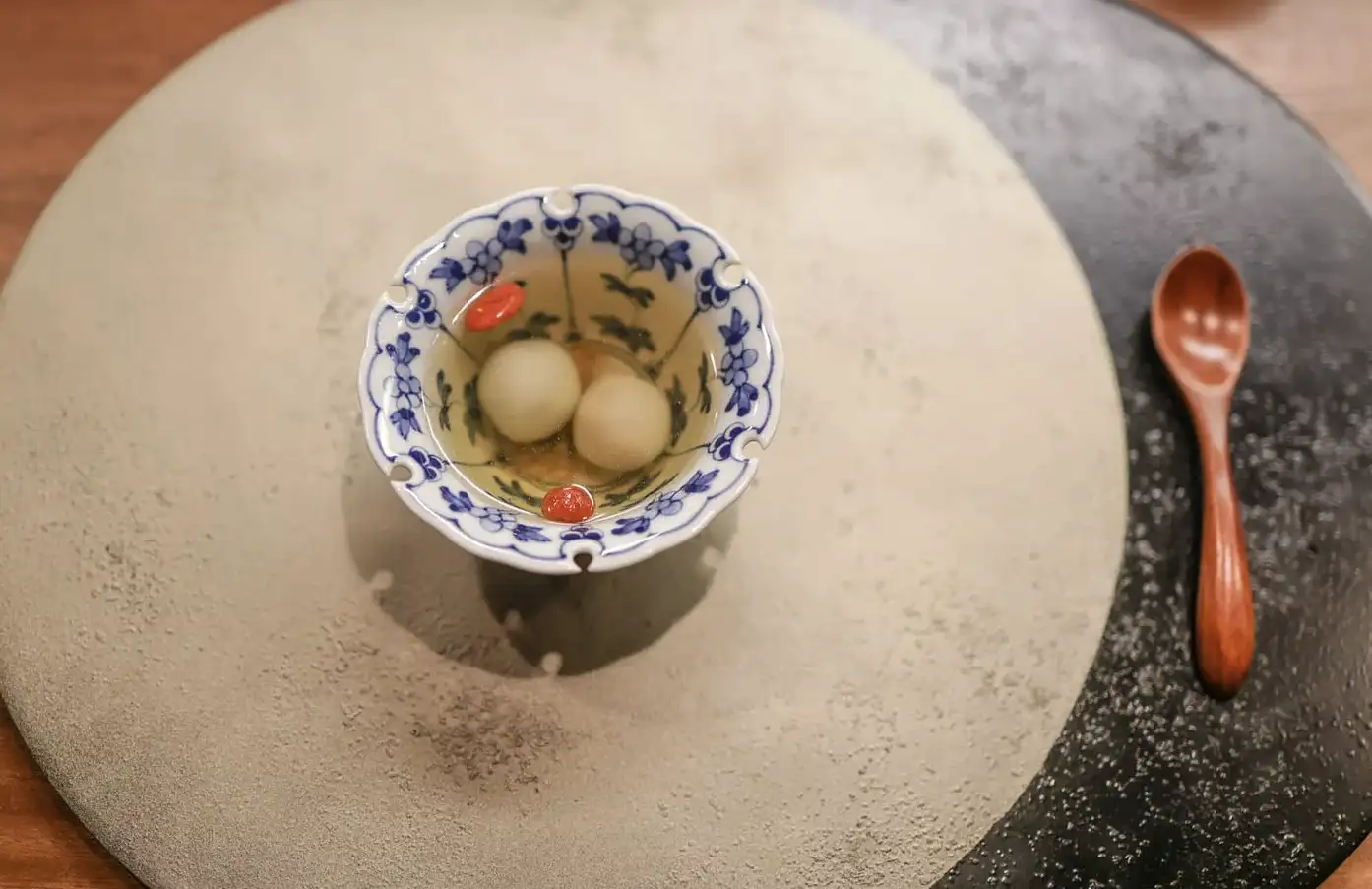
While they often cook recipes from the last few hundred years’ Joseon dynasty, I was lucky this October as Eun-hee and Sung-bae cooked from the Goryeo dynasty of the 11–12th centuries. Despite visiting over 12,000 restaurants around the world, it’s rare I taste recipes this historic and so carefully researched. They prepare each course with care and delicacy. While some are more accessible than others, even the most unfamiliar is fascinating, all artfully presented on gorgeous recreations of historic Korean plateware. Beginning bites like fried date and ginseng wraps or beef jerky in pine nuts, on to mignardises desserts (like taro root balls in chestnuts or yakgwa honey “cookies”), offer history in each bite.
I have long loved Korean sundae blood sausage and Onjium’s chewy, spiced version of cows blood, cow and pork meat was tender goodness, while Korean stuffed zucchini with veggies, pine nuts and teggei snow crab featured a delicate black mushroom that grows on surface of rocks. A meal here is a soothing education and seamless meeting of past and present, ideal with their Korean spirits pairing.
// 4F, 49 Hyoja-ro, Cheongunhyoja-dong, Seoul; www.onjium.org/onjium_en
Mingles
Since opening in 2014, minimalist-designed Mingles is one of the most lauded restaurants in Seoul, from its #16 standing in Asia’s 50 Best (the highest in Korea, just one slot above the aforementioned Joo Ok), its two Michelin stars and its place in the Top 100 Taste of Seoul.
While there were other experiences I found even more consistently delicious or nurturing, Mingles was one of the boldest menus. Gracious chef Mingoo Kang exhibits an international vision with Korean seasonal ingredients, having cooked for Nobu in Miami and the Bahamas and with Martin Berasategui in San Sebastian, Spain (he also runs Korean restaurant Hansik Goo in Hong Kong).
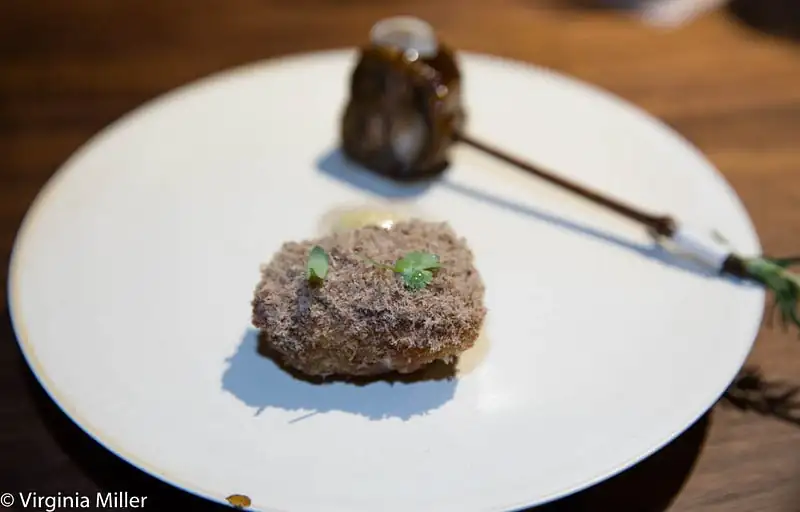
While “on paper” I was more excited by courses like crab 3-ways, unexpected standouts came in dishes like a hefty oyster dumpling stuffed with shrimp and pork, partnered by a juicy black chicken skewer. Chef Kang’s bold po course of Korean-style dried fish looked like dessert with coriander and Sichuan pepper-crusted abalone, scallop and sugar-cured bottarga fish roe, alongside bright dehydrated oranges. It’s a truly unusual dish that signified why this restaurant continues to make waves well beyond Korea. Being there on a special Taste of Seoul night where lauded Le Chamber bar managers paired courses with cocktails, prepared or shaken tableside, made for an unforgettable pairing and feast.
// 19, Dosan-daero 67-gil, Gangnam-gu, Seoul; www.restaurant-mingles.com
CASUAL EATS
Wongiog (원기옥)
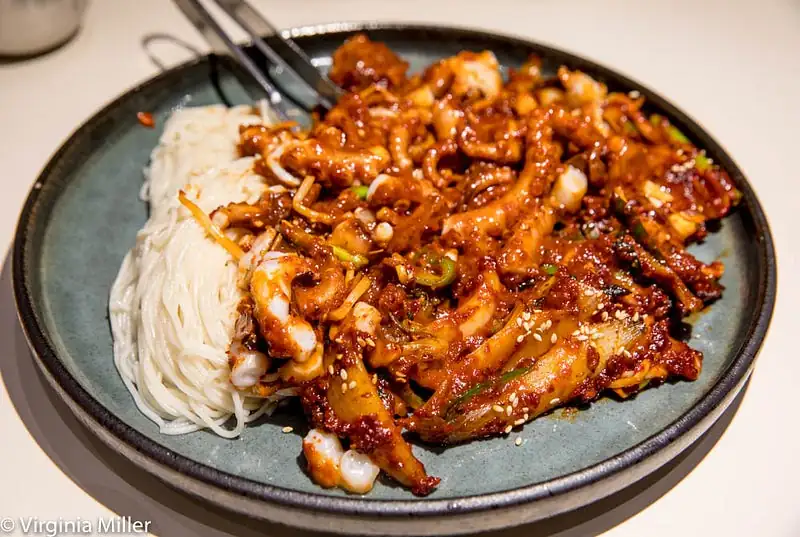
Wongiog (원기옥) or Wongiok is a special place for gopchang-jeongol (곱창전골) beef tripe hot pot. This Korean stew is loaded with veggies, seasonings and beef parts, namely tripe, small intestines and innards, which add depth of flavor to the broth. For those from cultures not used to eating offal on the regular, the intestines alone go through a meticulous cleaning process and removal of any white fat adhering to them as they’re rubbed with wheat flour and salt. This is the way to try tripe hot pot, in other words.
We feasted on a steaming pot with the accompanying addictive chili sauce, sesame oil and banchan. But there is much to love here, including a giant fried mound of seafood and veggies from asparagus to onions, dipped in sauce, to killer spicy octopus noodles in a gojuchang-style sauce that I could just not stop eating (and am craving since). We drank it down with the milky, thick, tart goodness of Haechang makgeolli. A proper lunch, indeed.
// 280 Seongsu-dong 2(i)-ga, Seongdong-gu, Seoul; https://app.catchtable.co.kr/ct/shop/wongiok
Gangjeong House
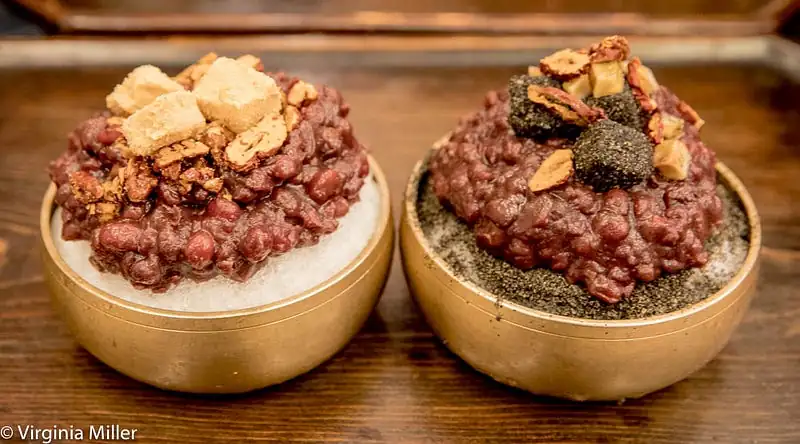
Gangjeong House is a Top 100 Taste of Seoul on the dessert side. It’s easy to see why just walking into the warm, glowing cafe and smelling treats made in full view, from traditional rice cakes to sweet rice sesame puffs topped with pistachios, fig, and pecan. But I fell hard for their bingsu (bingsoo), the Korean rendition of shaved ice, a refreshing, light dessert I adore in multiple cultures with its variations from Japan to Hawaii.
In Korea, bingsu dates back to the Joseon dynasty (1392–1897). Pristine shaved ice is topped with red beans, fruit, condensed milk, and here, with injeolmi soybean kinako mochi (chewy Korean rice cakes). My favorite was their black sesame bingsu with dried apple chips and black sesame injeolmi mochi. It all melts and swirls together in nutty goodness, my ideal dessert: flavor-packed, light and not too sweet.
// 1F, 435 Hakdong-ro, Gangnam-gu, Seoul; www.gangjeonghouse.com