Opening March 2018 and my #3 opening of the year in 2018, Che Fico has been a special pizza, pasta and house charcuterie haven in a city silly with the best in the nation in each of those categories. But despite our plethora of world-class pizza and pasta in San Francisco (just a couple recent national lists heavy with SF pizza: Food & Wine’s top 28; Italy’s Top 50 Pizza U.S.), chef David Nayfeld has a unique take unmatched in SF… or anywhere, for that matter. Yet the style is so very San Francisco.
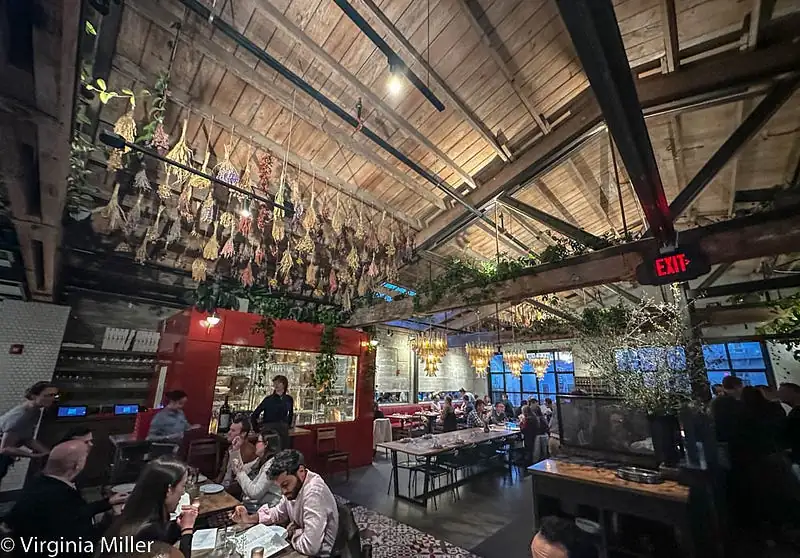
From day one, Che Fico was one of the toughest reservations in town, garnering national press and celebrity raves, with its signature colorful wallpaper, lofty upstairs taverna, wood grill, Italian pizza oven, charcuterie room and inventive “San Francisco-style,” modern Italian cuisine. Not even six months after opening, Bon Appetit named Che Fico one of 10 best new U.S. restaurants. Much changed in pandemic. For the entire industry, of course. But Nayfeld and team used the time to make some major shifts.
“What was true a year ago when we slowly [re-]opened Che Fico post-pandemic is true today,” Nayfeld tells me. “But I think it’s even more clear. In order for our industry to exist and prevail, guests need to be comfortable with the ‘new normal’ that they are, in fact, shareholders in these businesses. And if they don’t make the investments, interesting and delicious, independent restaurants won’t exist anymore.”
As we’ve learned, many industries have been heavily disrupted since COVID-19 hit. “It used to be that the cost of goods were equal to or more than the cost of labor,” explains Nayfeld. “The old model depended on free to cheap labor. In today’s world, labor can be almost double the cost of goods. At Che Fico, we require a large team. Our physical space is big and we require staff to create the optimal experience for our guests. This includes making sure guest’s water glasses are always full, a creative cocktail list, dedicated wine professionals on the floor and more, all amenities guests expect at a restaurant like ours… However, guests are the ones who… need to understand that their investments will keep the restaurants that are creating sustainable work environments open. If they don’t, we will just be left with restaurants that operate on formulas instead of art. These aren’t the restaurants that inspire or define a city or place.”
From day one and over many visits, I was a Che Fico fan. I loved their vision, a website statement of, “food focused on Italian cuisine through the lens of California. It’s our vision of Northern California as if it is a region in Italy, our connection to the region, and our love for Italian culinary practices.” Having traveled many regions of Italy for 23 years, from its Germanic North to my Sicily roots in the South, and living in a few states, plus LA and SF, I connect with NorCal as the place in the Americas that feels like a region of Italy. It’s heavily in our Mediterranean climate, look, vegetation (from olive to lemon trees), terrain and soil that grows everything, as well as our deep wine heritage in numerous AVAs (American Viticultural Area growing regions).
Che Fico boasted a killer team from the beginning, with artful, delicious cocktails by a longtime industry friend Christopher Longoria, a robust Italian wine list and their gorgeous reworking of a former auto body shop in a 1906 with interior design by Jon de la Cruz of DLC-ID. I wrote about it in multiple publications from Time Out to Liquor.com.
But over pandemic, pre-existing industry struggles became blatantly clear, from exhausted staff to money being drained. Owners David Nayfeld and Matt Brewer talked to the SF Chronicle last year of a major rehaul they made during that time of closure, from huge salary increases and equitable pay, to taking far less reservations for a more reasonable pace for their team. Admirably, they also launched elements like profit sharing for staff there a year or more and a substance-abuse support group.
How do such healthy changes reflect on the plate? I won’t lie: the food was amazing before and it’s amazing now. If one isn’t paying attention, they may not notice the difference. But I could feel the ease and slower pace the moment I walked in weeks back. Instead of a line down the stairs clamoring to get in as was typical even on a weeknight pre-pandemic, the vibe was such that we could chitchat with our server, managers, staff and even neighboring table, as plates and drinks were brought out.
Besides tip-splitting with the whole team, diners will notice a 10% charge separate from a tip, added to offset the real costs involved to run such a restaurant, like employee health insurance, providing living wages and the massive increase in ingredients costs since pandemic. You’ll notice higher costs across the menu, although we might not have lost some of the great restaurants we did if all were to take such steps. Realizing it’s all a strain for the majority of us who have had no pay increases since COVID-19 hit and are struggling with inflation in every aspect of life, yet the change is crucial to continuing to have dining as we know and love it.
“Everyone is at a challenging place with staffing,” Nayfeld says. “There is a renegotiation happening between labor and operators, in all industries. Everyone needs to come together and realize that pre-pandemic things were broken and needed to be fixed… There needs to be sacrifice on both sides and everyone needs to be accountable to truly succeed.”
For those willing to support such endeavors to create a workplace that can grow into the future with healthy balance, something the restaurant industry is not typically known for, Che Fico rewards your “investments” with deliciously memorable food and service.
Upon my recent return, old favorites, like the suppli (fried rice balls in tomato sauce), fresh-pulled mozzarella and famed house charcuterie/salumi are always impeccable starts. But I went seasonal this time and did not regret it. Carrot arrosto, or wood oven-roasted baby carrots, loaded with cara cara oranges, coriander, pistachio and citrus buttermilk is breezy yet substantive and of-the-season.
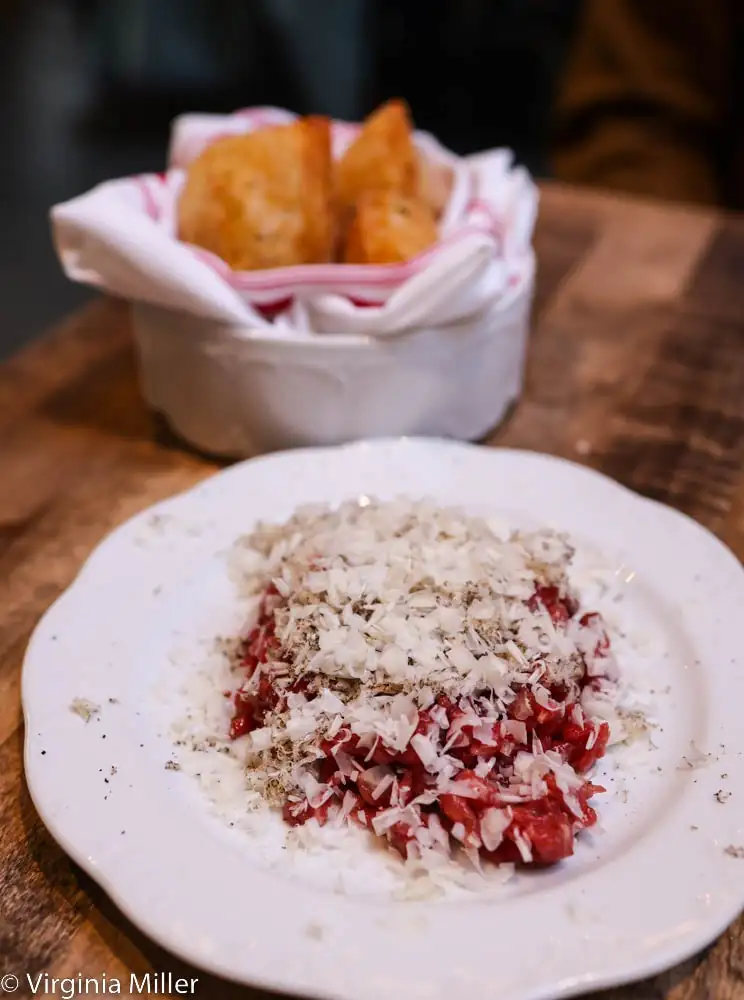
On the meaty-decadent side, rare, raw dry-aged Flannery beef forms the base of their carne cruda, a ridiculously good steak tartare, dressed in summer truffle, aioli and shaved 24-month aged Parmigiano Reggiano (the unparalleled, real stuff). It’s a superlative tartare and one of the best steak tartares ever, out of countless hundreds I’ve tried, even better scooped up with their house focaccia. The yin to this crudo’s meaty yang is their seafood crudo: silky, citrus-cured salmon layered in lemon, olive oil and an oh-so-welcome shaving of fresh horseradish adding bite and brightness.
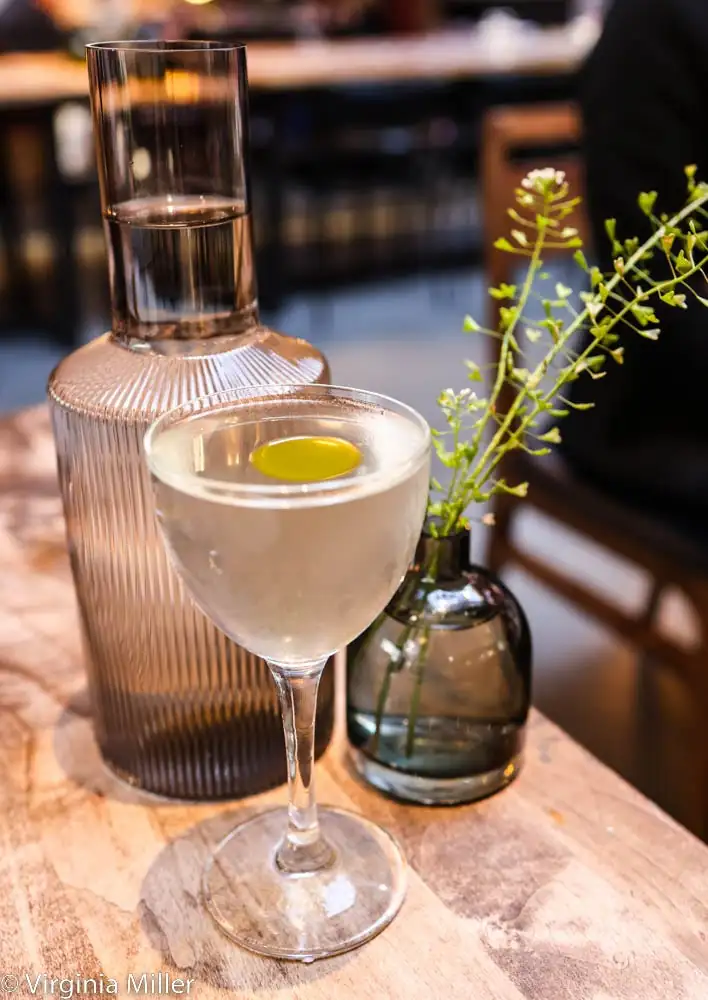
The cocktail menu hasn’t been the same since opening bar director Christopher Longoria is no longer creating new drinks here, now behind cocktail consultancy company, West Bev. While his creative cocktail range is no longer here, Che Fico’s cocktail classics and house variations are made with elegant care, namely an Arrivederci gin martini, saline with olive and anchovy brine and an herbaceous touch of St. George Spirits basil eau de vie (brandy). The most creative, fun drink of my recent visit is Sanguinaria, a beet-mezcal cocktail given bitter, earthy whispers from Sfumato Rabarbaro Amaro, Suze, coffee and texture from mascarpone whey. As ever, their deep, regional Italy wine list is a joy. You can traverse Italy, weaving from ancient Timorasso white wines from Piedmont to chilled Alto-Adige reds.
Che Fico’s unique pizza has long been one of their shining strengths. Cooked in their Italian pizza oven, Loretta, Nayfeld’s certification by the Associazione Verace Pizza Napoletana confirms his training in classic Neapolitan pizza cooking, with 00 (double zero) flour as his dough base. But he goes full San Francisco with sourdough starter and a forward-thinking, local focus to his style and toppings.
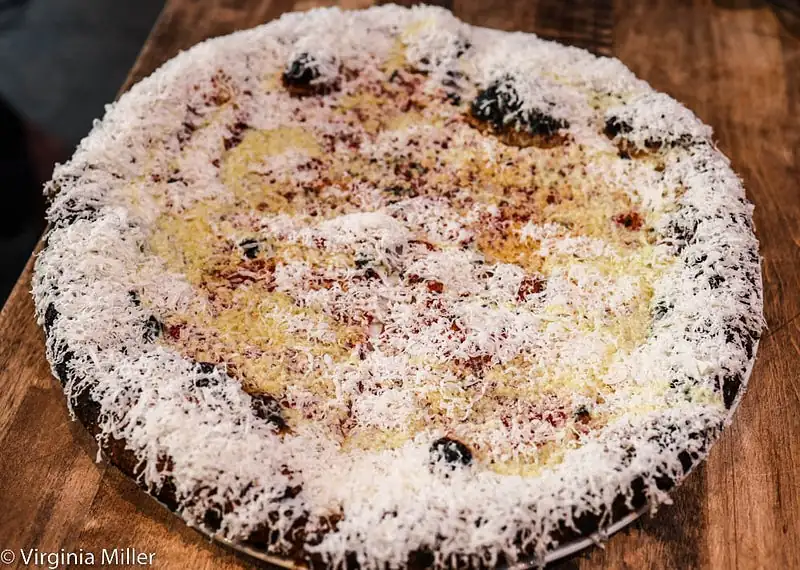
It doesn’t get more San Francisco than an Ode to Judy Rodgers pizza, the late, great matriarch of one of the nation’s most iconic restaurants since 1979, SF’s Zuni Café (she was also a Chez Panisse alum since its earliest days). This simple yet perfected pizza remains one of Che Fico’s best, dusted like white snow in a generous covering of shaved ricotta salata cheese, over oregano, garlic and San Marzano tomato sauce.
Over the years, specials like a mortadella pie or a seasonal fava leaf, Castelvetrano olives, green garlic, lemon and stracciatella cheese pizza delight. But Nayfeld’s pinnacle pizza, remains the Ananas, or pineapple pizza, of thinly-shaved pineapple, red onion and Calabrian chile bomba over mozzarella and San Marzano tomato sauce. Its spicy, sweet, savory profile has been much copied and nodded to in Hawaiian pizzas I’ve seen since, but not equaled, especially with that unique sourdough-meets-Neapolitan crust. I’m not a repeat girl at any restaurant and pride myself on often trying a whole menu over a couple visits. But this pizza is one I almost can’t say “no” to on any visit.
What I’ve dug into thus far would be enough reason to dine here, or return. But then there are the pastas. SF is a city with an inordinate amount of pasta masters, many with Michelin stars to match, some trained at 3 Michelin restaurants or in the pasta epicenter, Bologna, Italy, like Flour+Water, Quince, SPQR and their new Mattina, Sorrel, Perbacco and so on. While Nayfeld’s cooking background is impressively global, his SF focus modernizes and sets his classically-trained technique apart.
His potato gnocchi is as doughy and fluffy as my Italy favorites, in fontina cheese fonduta and shaved 24-month aged Parmigiano Reggiano. It’s the epitome of Italian purity. On the “modern” side, a gnocchi x2 situation, if you will, gnocchi plays with lamb sausage, broccoli rabe, preserved lemon and pecorino cheese.
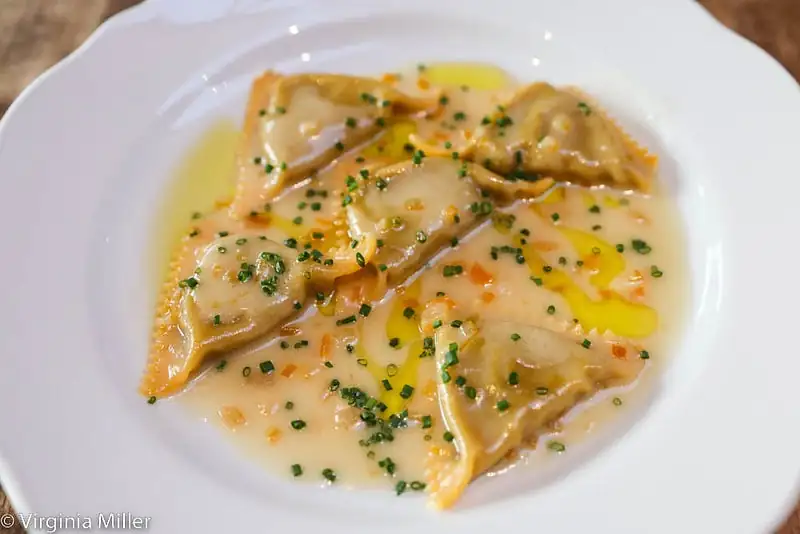
With no less than nine different pasta offerings on my last visit, from triple mushroom lasagna to classic agnolotti dal plin, I could spend a whole meal just in this section and not try it all. Though tough to resist favorites like a rabbit ragu over Istrian fusi pasta, besides gnocchi, I opted for triangoli, or triangle-shaped pastas filled with Tierra Vegetable Farms sunchoke pureé in a dressing of Meyer lemon, calçot green onions and a dusting of chives. This dish is the perfect example of a modernized, SF-style pasta showcasing local farms and ubiquitous lemons that grow everywhere here, but with Italy-perfect pasta dough.
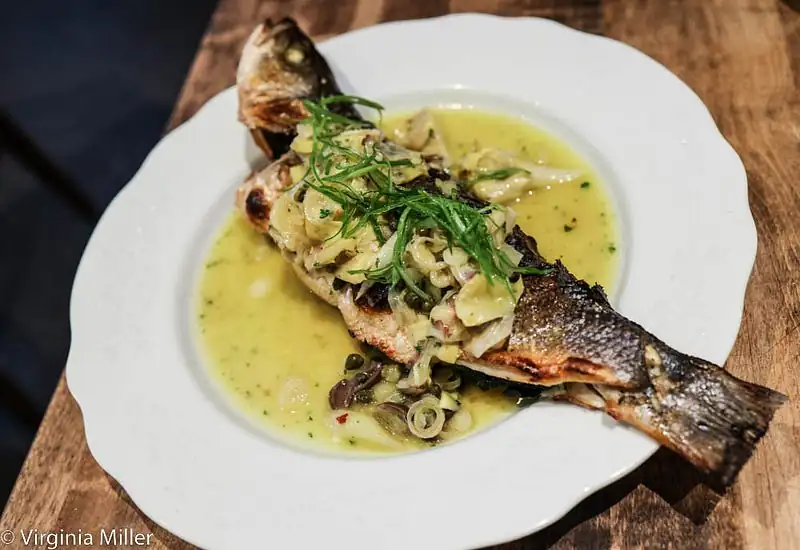
Did someone say secondi? I agree: between those pizzas and pastas, who has time for a main meat, fish or veg? This is where a larger table really helps. Especially because a whole, woodfire-roasted branzino fish partnered with artichokes, Meyer lemon, Taggiasca olives, green garlic and calçot green onions is a feast in itself that, again, recalls Italian ethos and spirit with NorCal, SF Bay Area flavors and precision.
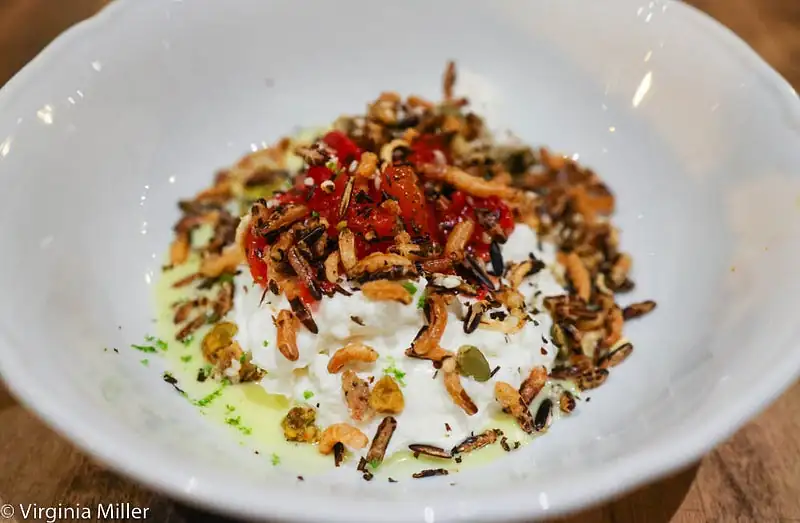
We stumbled into dessert. Though house gelati or sorbetti made the most sense after such (blessed) gluttony, I didn’t regret going with a budino di riso (rice pudding), creamy contrasted with strawberries, pistachio, crispy puffed rice and lime zest making the whole thing pop.
Classic Italian brutti ma buoni cookies to take home were brilliant for breakfast the next morning, redolent of hazelnut, fennel and orange. With espresso, it was a welcome memory of the feast the night before, a place where you’re paying for — in fact, investing in — a pursuit of balance and quality in a struggling, beautiful, hardworking restaurant world that was overdue to reinvent itself.
// 838 Divisadero Street, www.chefico.com