Eating Raw Beef Off the Side of a Cow, Ancient Hot-Cold Cooking Techniques & More in Elevated Korean Barbecue in Seoul
You may think you know Korean barbecue. Unless you’re Korean, live in the U.S.’ heaviest Korean communities, namely across California, Honolulu and New York, or have dug into Korean BBQ in Seoul, you likely have just scratched the surface of the category’s range.
Yes, there is bulgogi, sam-gyeop-sal (pork belly) and galbi (beef short ribs or pork ribs) and other barbecued meats we love so in Korean barbecue, available at hundreds of restaurants alone in my home of California (densest in LA’s Koreatown but also plenty in the San Francisco Bay Area, including SF’s Michelin-starred, James Beard nominated-San Ho Won). I’ve been weaned on Korean food in NYC (Queens) and LA since my girlhood growing up in suburbs of both those areas and with lifelong Korean friends. But I really got schooled when I finally made it to Seoul late 2022.
KEY TAKEAWAYS
Korean Beef Culture Differences
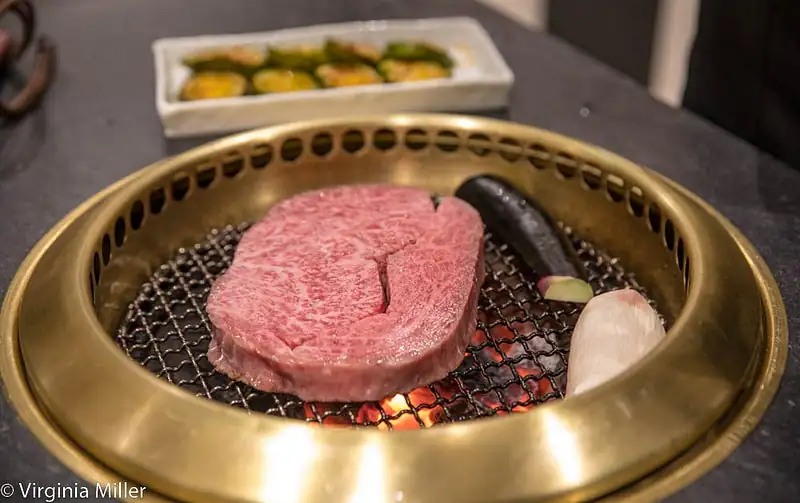
In Seoul, I found Korea’s grilled meat culture goes way deeper than casual grilling tableside. First, there’s distinctive butchering techniques, with animals divided into hyper-specific cuts. Korea’s Ministry of Agriculture, Food and Rural Affairs has 39 officially recognized cuts for beef, while there are a good 120 sub-categorized cuts, the most (by far) of any culture. Some of the most popular in Korean BBQ are the buchaesal (top blade/flat iron cut) and upjinsal (plate/skirt cut), both exuding intense meatiness being close to organs. Koreans have elevated enjoying all parts of a cow to an art form.
Many of us food folk are familiar with communal tabletop grilling, the variety of vegetables or small bites/banchan (kimchi, jangajji, namul, muchim, etc.) that accompany Korean grilled meats (and other Korean feasts), as well as dipping sauces like gochujang, ssamjang, doenjang, etc. Adding further intrigue is ubiquitous rice and variations like ssam: lettuces and veggies used to wrap the meat for a fresh, crunchy bite.
But in Seoul I learned of more grill types, from shape to material, like cast iron, copper, gridiron, stone. I saw variations in heat source (charcoal, gas, firewood, hay), and different knife methods, like special cuts against or with the grain. In spare few places in the U.S., I’ve experienced the slanted plate grill that allows fatty cuts, like pork belly, to render and drip down the grill into rice bowls (fabulousness). There is a special grill with a concave dip in its center, to hold dipping broth and fats as the meat cooks.
Hanwoo Beef vs. Wagyu
Korean hanwoo beef is only available in a few places outside S. Korea (like Hong Kong). It is among the rarest animal products in the world. Marbled and rich, as its more widely known Japan counterpart, waygu, hanwoo predates Japanese cattle. There are four native Korean cattle, including hanwoo (the others are Jeju Heugu black cattle, Chikso brindle cattle, Heugu black cattle).
The hanwoo breed is raised on rice straw with a fat content a bit leaner than wagyu but richer than USDA prime. The texture is tender, soft, meaty with less of the marbled unctuousness of many types of wagyu. Like wagyu, hanwoo has grades noting marbling and color in A, B and C levels.
While hanwoo is definitely a wealthier person’s game, or in Korea, typically enjoyed at celebratory dinners (think Lunar New Year or Chuseok, essentially Korean Thanksgiving). It’s not your everyday barbecue meat, but it exemplifies elevated levels of Korean barbecue and cuisine too little of the food world knows about.
Fine Dining Barbecue
There is also the fine dining Korean barbecue, the level of which I’ve never seen in steak or beef anywhere. Yes, the refinement of Japanese wagyu I’ve had around Japan and in regional Japanese wagyu cuts side-by-side at home in San Francisco at places like Gozu, Niku Steakhouse or Alexander’s Steakhouse, is as good as it gets.
But the two upscale Korean barbecue temples to beef below held multiple sights and tastes I’ve yet to experience anywhere else in the world. This includes an ancient alternating hot and cold grilling technique, diamond-cut beef or literally eating raw beef off the side of a massive cow wheeled to us tableside from the deep freezer. I experienced all of the above and more at the following two exceptional restaurants.
FINE DINING KOREAN BBQ RESTAURANTS
Born & Bred
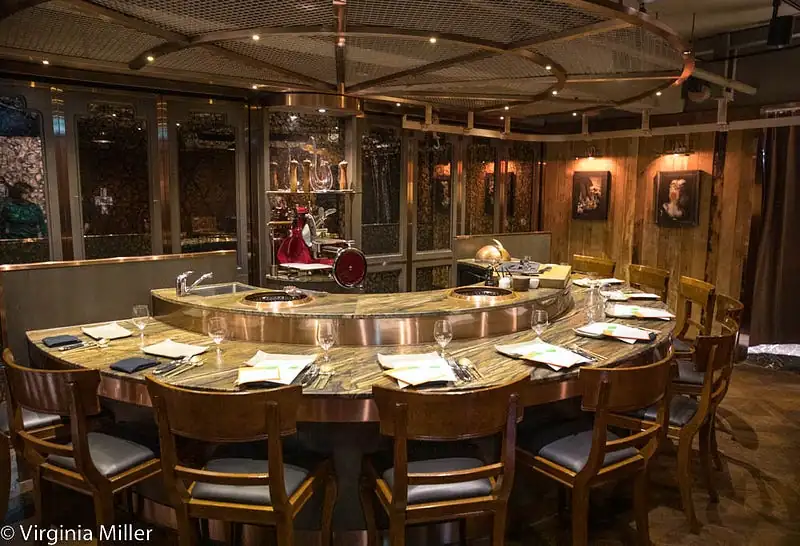
Part of the top 100 restaurants and bars in the Taste of Seoul awards I attended in October 2022 and on The World’s 50 Best Discovery list, Born and Bred’s (B&B) omakase — at an intimate half circle bar in the basement — is a revelation. I’ve dined at over 12,000 of the world’s best restaurants and hundreds of stellar steakhouses. But I’ve never had an experience like this.
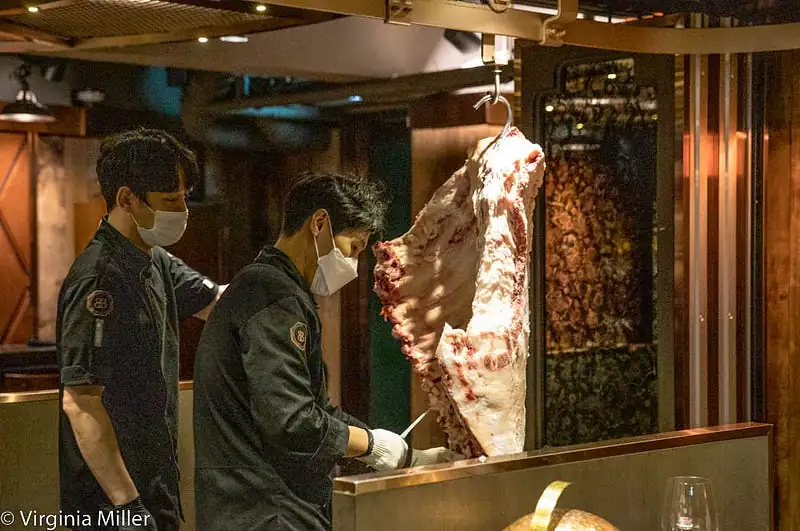
I’ll cut straight to the piece de resistance: towards the end of the meal, massive sides of beef are rolled out on pulleys on a ceiling track that comes directly from the deep freezer. Gloved staff sliced raw, marbled beef off the side of a cow and fed it to us. Meeting all the safety requirements of temperature and time it’s safe to eat beef raw (our cow was butchered two days prior with a maximum of three days to serve raw), it was a unique textural, rich bite.
There are different concepts on each floor of the four-story restaurant: butcher’s shop, casual dining, private dining and the aforementioned basement bar seating and omakase tasting menu. Born and Bred was opened by Jeong Sang-won, the son of a beef purveyor father who has been running a renowned butchery for decades. I met them both as they showed me their newer, pristine, state-of-the-art butchery space a few minutes walk from the restaurant near 100+ years-old Majang Meat Market.
In the market, Jeong created a unique fine dining beef concept, inspired by surrounding classic butcher restaurants, but far more modern and upscale with wine and whisk(e)y pairings. The original Born & Bred became so popular they moved to the larger space I visited a short walk from the market. The basement is dark and clubby with woods, red leather bar seats and bronze. Serving only female cattle between six and seven years old, which Jung believes have more complex taste, everything I ate was tender goodness, bold, confident plates such as diamond-cut top blade served on an individual grill and just-seared sirloin with pickled mustard seeds.
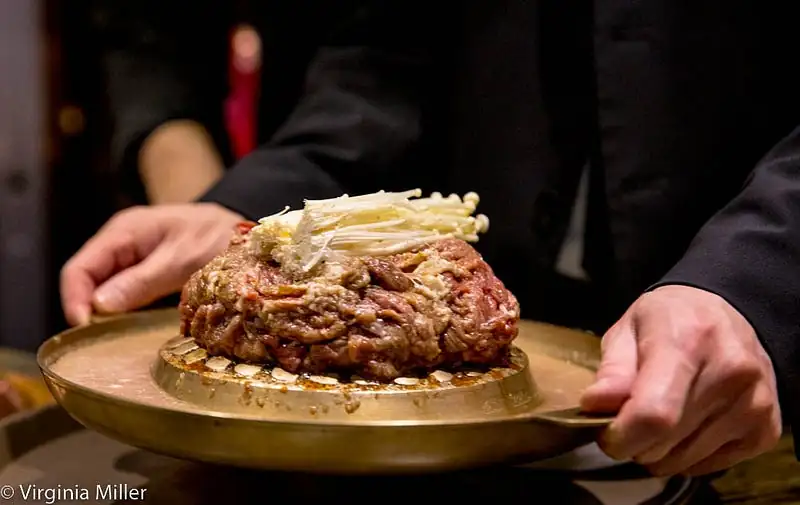
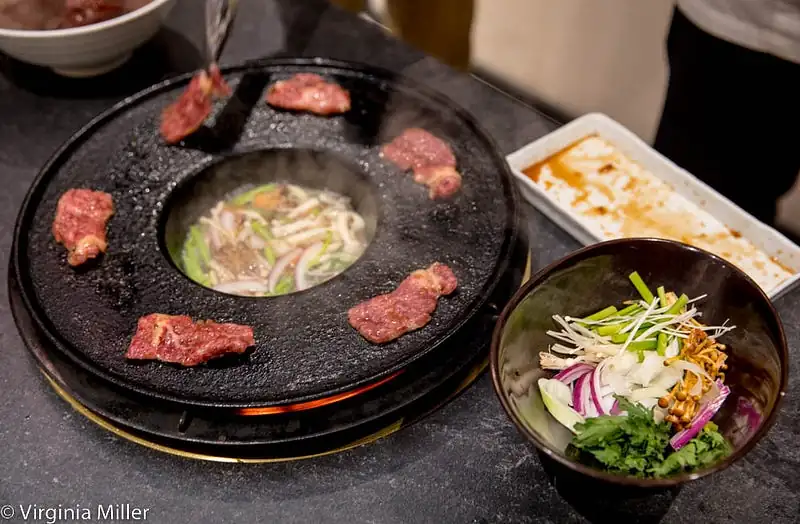
While jeolliptugol — or jeolliptu — is a known, centuries-old style of Korean hot pot, here I experienced a more rare pot used in the Joseon era (1392–1910) and modeled after a fighter’s helmet turned upside down. Almost like a bowl grill, a wide lip allows you to grill meat in a circle around boiling broth and other ingredients in the center.
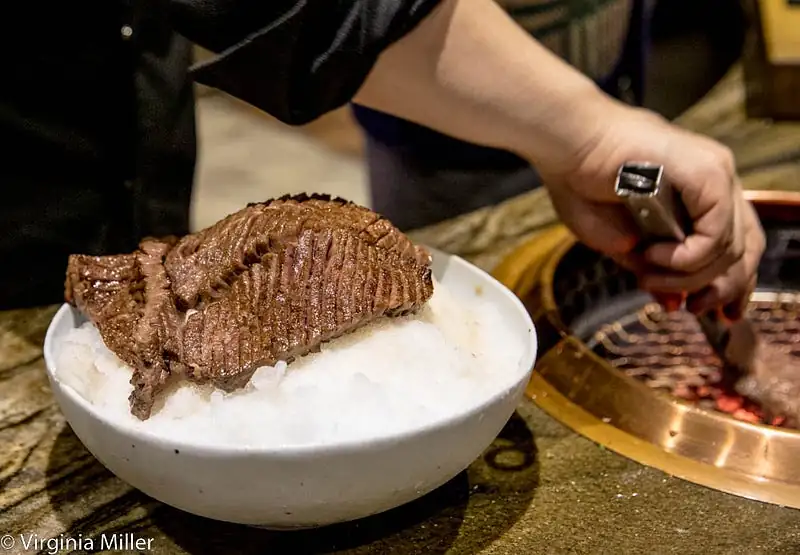
Particularly mind-blowing and rare was an ancient hot-cold, meat on ice method, historically consumed in the winter and called “seolyamyeokjeok” (seol ya myeok jeok, literally meaning grilling meat under the snow at night). I saw a picture of an ancient Joseon-era painting by Kim Hong-do, presumed to be from the late 1700s or early 1800s, where they are grilling this meat out on the snow. At B&B, it was grilled in front of us, then moved to a towering bowl of crushed ice, flipped on both sides so as to sear and cool it, back to the grill, back to the icem and so on until it was served to us, tender and rare inside, warm and seared on the outside. A fascinating, very rare (and delicious) Korean barbecue/beef grilling technique.
// 1 Majangno 42(sasibi)-gil, Seongdong-gu, Seoul; http://bandb.co.kr
Byeokje Galbi
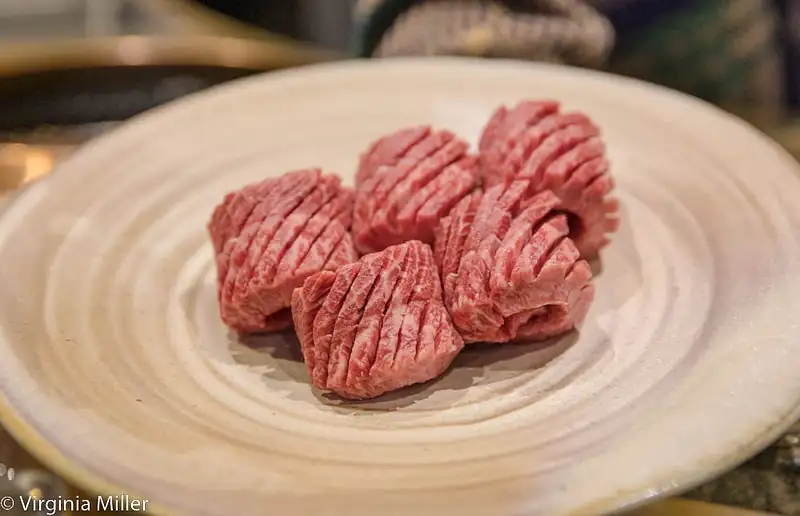
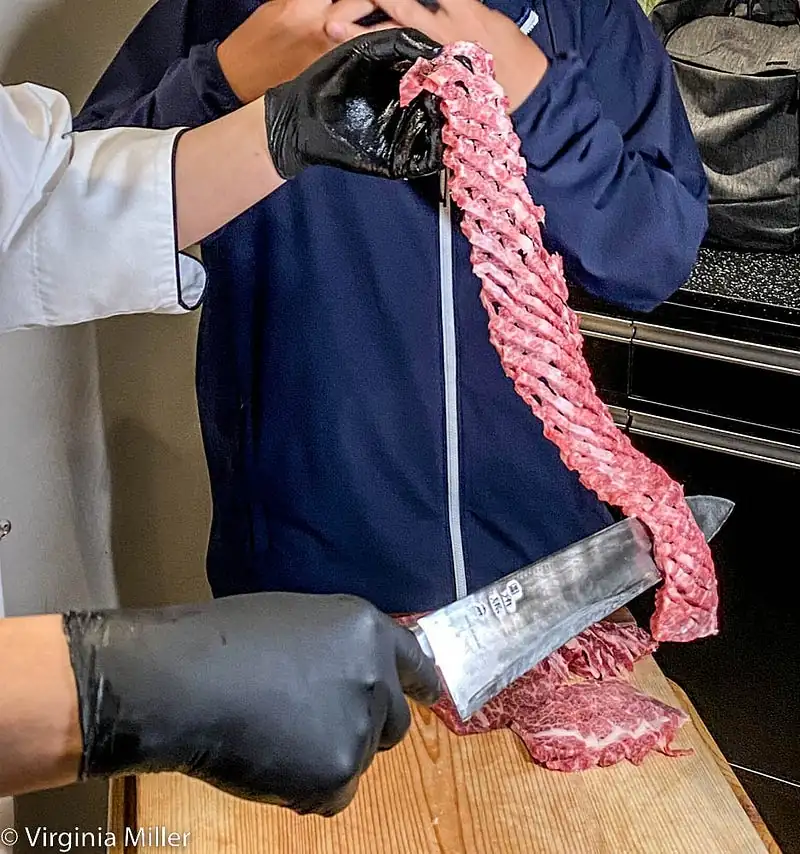
Byeokje Galbi is a longtime fine dining beef-centric restaurant since 1986 with a newer Byeokje Galbi, Cheongdam, location in addition to the original. Another Taste of Seoul top 100 restaurant, it’s a prime example of exceptional beef cooked tableside, showcasing exquisite ultra tender, thinner “diamond” cut meat unfolding like a gorgeous accordion with criss-cross cuts, meats grilled tableside over charcoal, and here again I experienced grilling with the ancient Joseon-style jeolliptu “helmet” bowl.
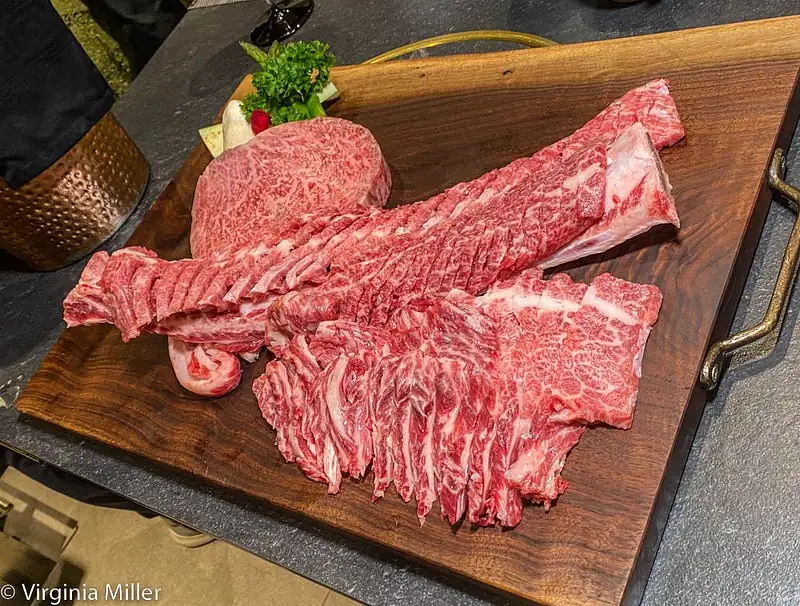
Byeokje Galbi is a Seoul institution serving barbecued beef since 1986. They breed cows at a local farm in Pocheon where they purchase only the top 1% (BMS No9) at a daily auction, then handled by an artisan butcher. Grilled bone-in galbi is exceptional here as chef Won S. Yoon demonstrated and cut a wide range of for us tableside.
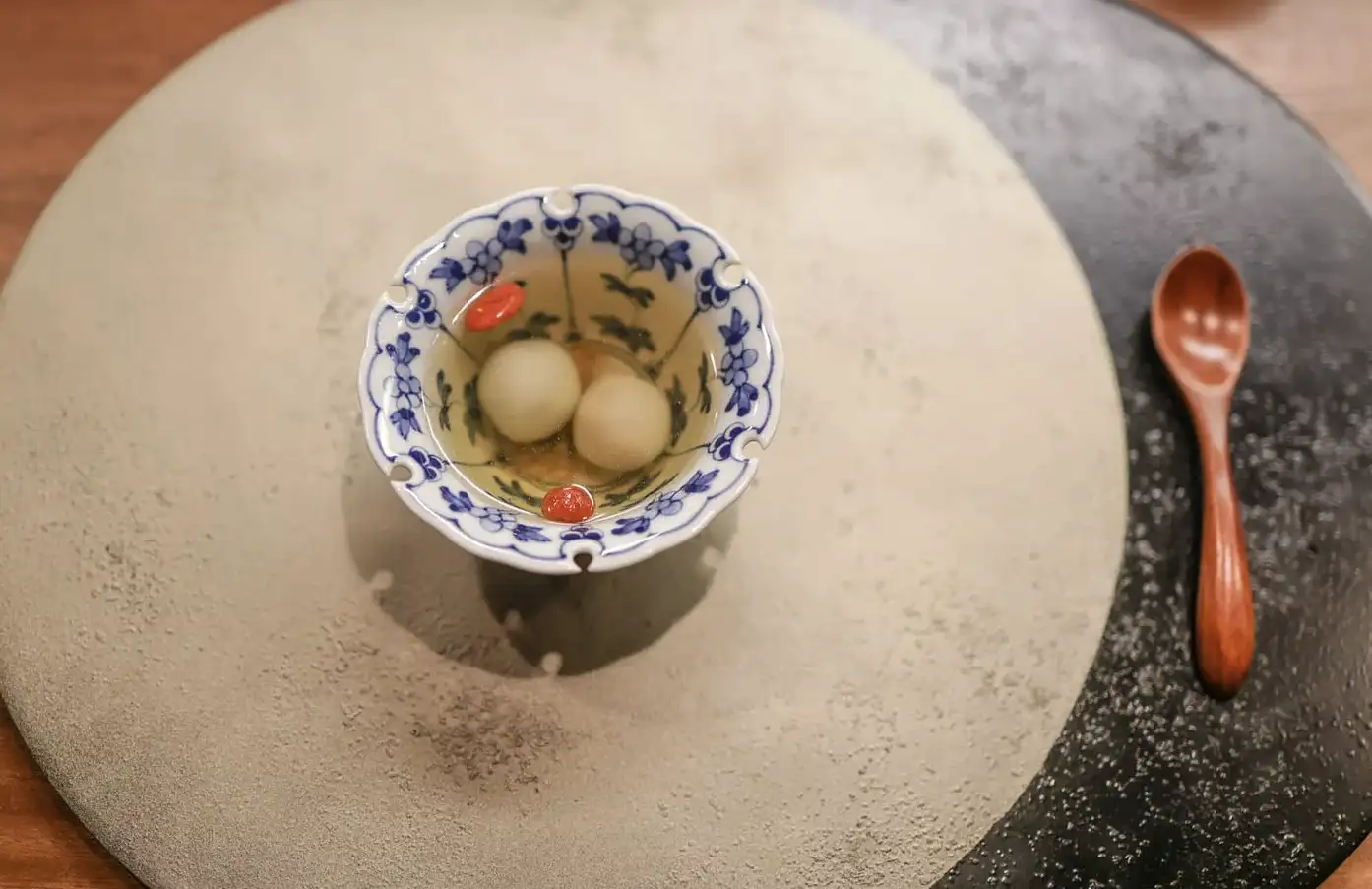
Initial cold banchan delighted, like roast beef wrapped around squash, grain porridge in milk with mandarin marmalade, or tender braised beef tendons in Korean soy, ginseng and garlic. But traditional Korean beef soup laden with abalone and sea cucumber/geoduck, was sheer comfort, while buckwheat cold noodles (a specialty of North Korea; historically a winter soup) swim in a gorgeous broth of kimchi and beef stock, accompanied by pickled cabbage and onions. So much more than beef, a meal here is an education and a delight. Especially exciting, they are looking to open their first branch in the States, although we still cannot import hanwoo beef.
// 1–4 Yangjae-daero 71-gil, Songpa-gu, Seoul; www.bjgalbi.com
Thanks to my Seoul-based colleagues, Summer Lee and Choi Jung-yoon (Choi is head chef at the Sempio Korean Fermentation Culinary Research Centre; founder of JY Tour, a guide to traditional Korean restaurants), I learned more history on these techniques. I was able to attend a meal as a part of Choi’s club, NANRO, created to engage food-loving people globally around Korean food and its rich history. Over food, we discussed the wide range and ancient history in Korean barbecue and its elevated aspects rarely seen outside Korea.
It’s about time food lovers globally and in the Western world got more exposed to Korean barbecue techniques and hanwoo beef. Here, there is a whole wave of elevated beef and barbecue fine dining I could see being beloved the world over once experienced. Dining at the aforementioned 12,000+ restaurants globally, it’s rare I experience things I’ve never seen before, and I did at both these Seoul restaurants… and beyond. I call on steakhouse, beef and barbecue lovers to get thee to Seoul to experience the same. You won’t regret it.